
Surface Insulation Resistance (SIR) testing assesses the risk of flux residue at component terminations by measuring the extent of electrical insulation degradation when flux residues are exposed to heat, humidity, and electrical bias. If flux residues under QFNs, BGAs, or other bottom-terminated components are conductive or hygroscopic, SIR values drop.
A declining yet stable Surface Insulation Resistance (SIR) curve provides insight into the flux residue beneath the component termination.
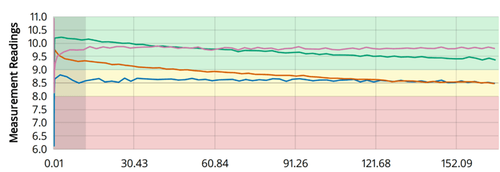
The residues are mildly conductive or hygroscopic but do not actively cause electrochemical failure. This decline indicates that the residue is absorbing moisture, causing mild leakage. There is a risk of intermittent or device failure over time, especially when exposed to varying temperature and humidity use conditions.

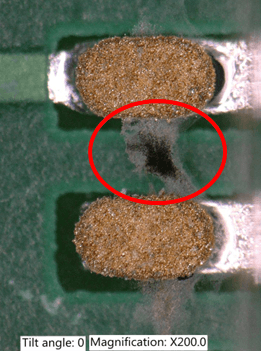
When SIR drops significantly over time, this indicates electrochemical activity and the potential for dendrites.
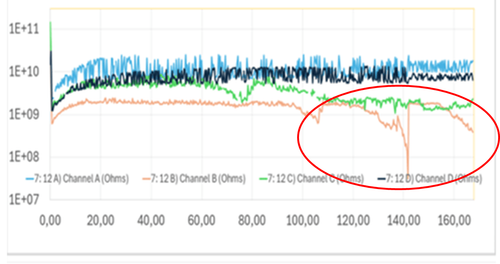
This is one of the clearest indicators that a true electrochemical failure mechanism has begun, not just harmless ionic activity. This failure is treated as a red-flag event because it signals that the system has transitioned from “benign residue behavior” to active insulation breakdown.
Surface Insulation Resistance (SIR) testing is one of the most important reliability tools in modern electronics manufacturing because it tells you whether flux residues left on the assembly will cause electrical failure over time.